Every kilogram
of Nigerian waste
is worth money.
Somebody is already picking through the rubbish on your street for the parts worth selling. They do it by hand, they are paid badly for it, and not one gram of it gets written down. We build the bin that does the recognising and the weighing itself, and pays whoever brought the material.
- What we collect
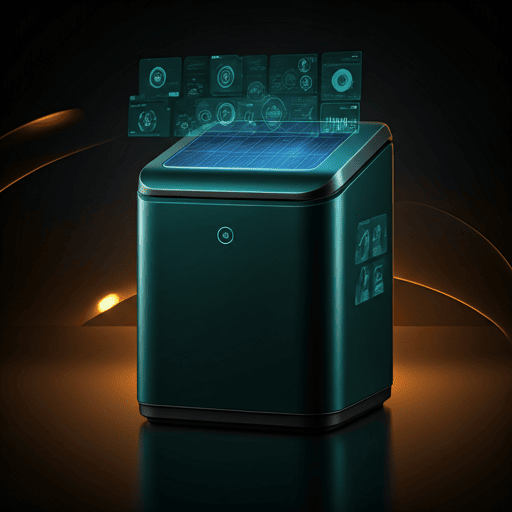
- Three streams PET bottles, nylon and organic waste, each into its own chamber.
- Power
- Off grid Solar with battery backup, so a unit keeps working through an outage.
- To use it
- No app needed Every deposit prints a slip you can redeem in person.

Waste that nobody counts cannot be worth anything
Nigeria generates around 32 million tonnes of solid waste a year, with very little of it sorted. The tonnage is not really the problem. The problem is that almost none of that material is separated, weighed or recorded at the moment somebody throws it away, and everything downstream breaks because of that one gap.
-
Sorting is unpaid work
Asking a household to separate its rubbish is asking for a favour, and favours do not scale. Paying for it at the moment of disposal is a different proposition entirely.
-
Recyclers are buying blind
Processors take whatever arrives at the gate, in whatever state it turns up. Nobody can tell them what next month looks like, so nobody can justify investing in capacity.
-
The value leaves with the material
The people who recover material by hand capture a fraction of what it is worth, because nothing they collect is measured or attributed to them.
Plastic waste volume and recycling rate: UNDP Nigeria, citing World Bank data. National solid waste figure: Dr Iziaq Kunle Salako, Minister of State for Environment, January 2024.
Drop it in, walk away paid
The whole interaction takes under a minute and needs nothing from you except the material itself.
-
Choose the material
Pick what you are putting in on the screen and the right chamber opens. Everything stays separated from that point on, which is what makes it worth more at the other end.
-
The bin checks your work
A camera identifies what actually went in and a load cell records the weight, both on the unit itself. No connection needed for a deposit to go through.
Two independent readings of the same deposit means a mistake, a jam or somebody trying it on all show up as a disagreement.
-
You get paid
A code appears on screen and prints on a slip. Scan it with the app, or keep the paper and redeem it in person. Not everybody carries a smartphone, and this has to work for everybody.
Built for the street, not the showroom
A bin lives outside. It gets rained on, sat in full sun, leaned against and occasionally attacked.
Ours runs on solar with battery backup so it keeps going through an outage, and the sorting chambers use sloped floors and gravity rather than motors, because a motor is one more thing that can jam.

On-unit recognition
A camera identifies the material as it goes in, without needing a network connection.
Load cell weighing
Every deposit is weighed, and weight is what the reward is calculated from.
Four sealed chambers
Three for the streams we buy, plus one for anything else that gets dropped in. Sloped floors let gravity spread deposits instead of piling them under the opening.
Fill reporting
Each chamber reports how full it is, so collection happens when a bin needs it rather than on a fixed round.
Solar and battery
Designed to sit where mains power is unreliable, and to carry on when it drops.
Screen, printer and speaker
The parts a person actually touches, including the printed slip that keeps the app optional.
Three streams, sorted at source
Material that reaches a recycler already separated and already weighed is worth more than the same material tipped out of a truck. Sorting at the point of disposal is the whole idea. We buy three streams, and the bin has a fourth chamber for whatever else people put in it.
PET bottles
Drinks bottles and clear containers. Rigid enough that individual items can be counted as well as weighed, and the stream recyclers want most.
Nylon
Bags, film and water sachets. Light and bulky, so a chamber fills long before it gets heavy, and the material most likely to end up in a drain.
Organic waste
Food and plant matter. Worth nothing to a recycler and the largest single source of methane in a landfill, which is why we process it ourselves.
Everything else
People put things in bins. The fourth chamber catches whatever does not belong in the other three, so one wrong item never contaminates a whole stream.
Organic waste goes back to farmland
PET and nylon are sold on to recyclers. Organic waste is the odd one out. Nobody wants to buy it, it rots within days, and left in a landfill it is the single largest source of methane. So it is the stream we handle ourselves.
We run a carbonisation unit that heats organic matter without oxygen and turns it into biochar, a stable porous carbon that holds water and nutrients in soil rather than letting them wash away. Dry sandy farmland is exactly where that earns its keep, and Nigeria has a great deal of it.
Who is building it
REVERVE is based in Abuja, Nigeria, with hardware, software and enclosure running in parallel.
Zakariyau Abdulrahman
Chief Executive OfficerCompany direction, partnerships and external relationships.
Abdulmumin Abdulwahab
Chief Operating OfficerOperations and delivery across the internal teams.
Hardware
The bin technology and mechanism: sensing, classification, weighing and the electronics behind them.
Software
The system behind every deposit, the wallet application, and the operations view used to service units.
Enclosure
Mechanical design and fabrication of the body, handled with an external design firm.
The things people ask
Tell us who you are
We want to hear from recyclers and material buyers, farms and agricultural businesses, anyone with a site that could take a unit, and investors backing climate infrastructure in Nigeria.
- Based in
- Abuja, Nigeria