Making waste
worth counting.
REVERVE builds the equipment that turns discarded material into a measured, sorted, saleable stream. It starts with a bin that recognises what you put in it, weighs it, and pays you for it.
- Where we are
- Abuja, Nigeria Design, build and testing all run out of one place.
- How we are organised
- Three teams Hardware, software and enclosure, working in parallel.
- What a deposit returns
- Value, on the spot A redeemable claim, issued the moment the material is weighed.
Why we started
Nigeria does not have a waste problem for lack of people willing to pick material out of it. It has a problem because none of that work is measured.
There is already a recycling economy
In every Nigerian city it runs on people walking streets, sorting by hand, carrying sacks and selling what they find. It recovers real material and it supports real livelihoods.
None of it is written down
Nothing is weighed, nothing is classified, and nobody upstream or downstream can see what actually moved. The people doing the work capture very little of the value they create.
Sorted material is worth more
Buyers pay a premium for a stream that is clean, separated and of a known weight. A mixed sack gets discounted before it is even opened, and the discount comes out of the collector's pocket.
A bin, and the system behind it
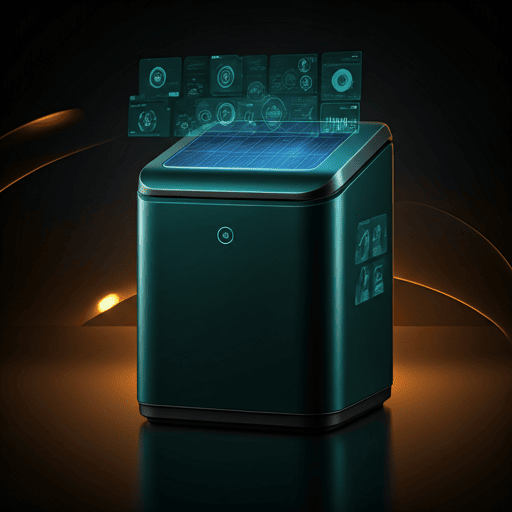
A solar powered unit that identifies material at the point of disposal, weighs it, drops it into its own chamber and issues a redeemable claim to whoever deposited it.
We collect three streams, PET bottles, nylon and organic waste, each with a chamber of its own. A fourth chamber catches anything else that gets dropped in, so a wrong deposit never contaminates a sorted stream.
Behind the unit sits the record of every transaction, a wallet application for the people using it, and an operations view for the teams servicing the machines in the field.

What we hold ourselves to
We build the whole thing
Hardware, software and enclosure move together rather than in sequence, so a decision in one shows up in the others the same week. The enclosure is fabricated with an external design firm working to our drawings.
It has to survive outside
A unit lives on a street in heat, dust and rain, and it cannot assume the grid. Solar with battery backup keeps it collecting through an outage, and every part is chosen for what it does after a year outdoors.
We measure before we say it
Every figure we put in front of a partner comes off a scale or out of a record, not off a slide. That applies to what the machine recovers, what it pays out and what we tell a buyer they are getting.
The people behind it
REVERVE is run from Abuja, Nigeria by two founders, with hardware, software and enclosure teams building against a single roadmap.
Zakariyau Abdulrahman
Chief Executive OfficerSets company direction and owns the relationships outside the building: partners, buyers of the recovered material, and the people who decide where a unit is allowed to stand.
Abdulmumin Abdulwahab
Chief Operating OfficerRuns operations and delivery across the internal teams, from what gets built in a given cycle to how a unit is serviced once it is standing on a street.
Straight back to farmland
Organic waste becomes biochar
PET and nylon have a buyer waiting. Organic waste does not, which is exactly why it ends up in a landfill or on a fire. We run a carbonisation unit that converts it into biochar instead.
Biochar goes back into Nigerian soil as an agricultural input, so the one stream with no resale value becomes the one that returns to where food is grown.

Come and talk to us
Whether you buy recovered material, manage a site that needs a unit, or want to build this with us, we would like to hear from you.